Discover (all) our stories
AI between challenges and opportunities
Interview with Fabien Mangeant
AI is a digital technology that has been developed to mimic some human behaviors. So it's about knowledge search, pattern matching, decision making. And this technology that we want to use to assist humans is used already in many areas. So this is used in healthcare, to develop diagnosis. This is used in mobility to support road traffic prediction. This is used in weather forecast. And it's already bringing a lot of benefits.
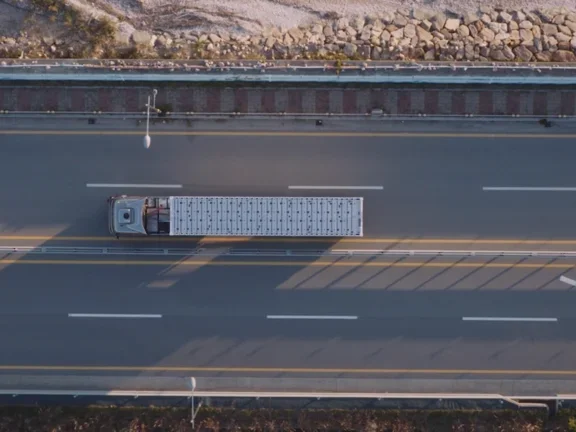
AI has been developed inside Air Liquide for more than 20 years. This has already been used in production planning, production scheduling support to the supply chain, minimizing the number of kilometers driven by our trucks. This is also installed inside our customers to understand and predict their demand. We are also using AI for home healthcare. We use the data collected from the healthcare devices and give them to the nurse, the technician, at the right moment.
As a rising technology, AI is also bringing a lot of new challenges. We know that the datasets that are used to develop some of the AI may be biased. So this means that we could have a bad influence of these AI on the global behaviors of the society. We know also that there may be lack of transparency, lack of explainability.
To make sure that we use AI in the right way, we have to develop a lot of new technological bricks, to develop the governance and ensure that we are using a trustworthy AI.
At Air Liquide, we strongly believe that AI will help our employees with new tools, so they will have access to new informations, to new knowledge, to the best practices of the company. And we will also be able to automate the most repetitive tasks that they face every day. This is going to be really the revolution of the years to come. From a societal point of view, I wish that AI will help us solve the most complex problems of our world. And I wish also that of course, we will use a trustworthy AI with a minimized carbon footprint for the good of the society.
Artificial Intelligence, between challenges and opportunities
Making life of people with diabetes easier
Interview with Agnieszka Kula-Borsuk
Diabetes is one of the most widespread diseases in the world. And this is a chronic condition. Chronic condition means we have it for life, and the chronic condition means we have it 24 hours a day.
Sometimes we are diagnosed when we are small babies and we have it until elderly age.
During 24 hours a day, we need to take more than 180 additional decisions per day when we have this chronic condition. This creates additional burden for the patient. But the patient wants and tends to live their life to the fullest.
In Air Liquide we are fully committed to make the life of the diabetic patients easier. And this relies on three key elements. First one is empowerment of the patient, him or herself. The patient needs to have all the data and all the information to take those additional 180 decisions per day. Second is innovation. We can provide the technology to support, and to support on data and on the decisions the patient will take. And the third one is the support. Because every patient is different, we provide personalized care plans for every patient.
And those three elements contribute to improve the quality of life of our patients. Each patient is different, and this is why empowering patients requires personalized care pathways.
Healthcare systems may vary from one country to another, but patients’ needs remain the same. Air Liquide Healthcare is a global player in diabetes and brings strong expertise in patient support with dedicated teams.
Our objective is to help improve patient’s quality of life by providing optimal support at the best cost.
This is also contributing to turn Healthcare Systems to be more sustainable.
Making life of people with diabetes easier
Driving the Future of Semiconductors
Interview with Nicolas Blasco
Questions
Essential to daily life ? Your contribution? Key challenges ?
Semiconductor devices are hidden components that are present everywhere in our daily life. A semiconductor chip is made of silicon, which is the most abundant material on Earth and is typically the size of less than one square centimeter and one millimeter thick. Semiconductor devices can be electrically conductive or electrically insulating, depending on the way they are used. And this is fundamental because it allows to access the famous zero and one that are the basis of modern computing. Zero when the material is insulating, one when the material is conductive.
Semiconductor devices are used everywhere in our daily life, for things as diverse as communicating, working, traveling, but they are also used for fundamental science discoveries, for instance in environmental science, in medicine or physics.
Air Liquide doesn't produce semiconductor devices. However our gases are used at every step of semiconductor manufacturing. We produce gases like argon, helium, nitrogen or oxygen at the highest purity possible to meet the requirements of the industry. In addition, we also invent and develop new gases and new molecules to answer very specific needs of our customers with whom we co-develop processes and materials.
Today, every device in the world has been manufactured using an Air Liquide molecule. Air Liquide also contributes to the industry sustainability. For instance, we constantly optimize and reduce the electrical consumption of our gas production plants and use renewable energy whenever possible. In addition, we develop new materials with a lower environmental footprint. For instance, we released a new class of etch gases, our EnScribeTM offer, with lower global warming potential than their traditional counterparts.
The industry will have to face several challenges. The first one relates to energy transition. The chips will have to consume much less energy to face the exponential increase of demand pulled by artificial intelligence. The second challenge will be to secure the supply chain with more and more localization of production plants pulled by public incentives. The third challenge will be technological itself. The chips will have to become even smaller to face the tremendous increase of demand, especially in the memory space that we are expecting to see in the next few years.
Air Liquide helps facing those challenges by constantly innovating in terms of new materials, in terms of reducing the electrical consumption of our gas production plants, and anticipating our customers’ needs.
Driving the Future of Semiconductors
Achieving carbone neutrality by 2050
Interview with Guillaume de Smedt
Senior Expert, Technology Integration, Electronics activity of Air Liquide
Questions
Your climate strategy: Your role in a low carbone society? What’s next?
We have a very clear climate ambition and a clear commitment to reach carbon neutrality by 2050. Our climate strategy relies on two pillars. One, reduce our own emissions. And second, to support our customers to help them reach their own neutrality.
To reduce our emissions, we rely on sourcing massive amounts of renewable and low-carbon power, modernizing our industrial assets, and installing carbon capture on our hydrogen plants. Carbon capture technologies that can also be used to reduce the emissions of our customers. For instance, in the cement sector.
Our products are used in everyday life and tomorrow in a low-carbon economy, It will be virtually the same with low-carbon gases. Indeed, in order to decarbonize our economy, we will need low-carbon gases to produce batteries for electrical cars. We will need gases to produce low-carbon steel. We will need CO2 capture solutions to produce low-carbon cement, just to name a few applications of our gases. In the meantime, our role and our duty is to work along with our customers in order to support them in their journey to neutrality.
The journey to neutrality has started and well started, with most of the large industrial companies
committed and policy framework being developed around the world to accompany the transition to neutrality. Still, the journey is complex. The journey is long. We know it and now that we have the plan, we know exactly what we have to do. We need to implement concretely, which means investing in new technologies, investing in infrastructures, both for hydrogen or CO2.
And this takes time. This comes with complexity. We need to align with the finance sector, the policymakers and the industrial companies on these objectives, and on the way to achieve it. We know the journey is difficult. We know it would be long, but we know the direction and it's very clear and we are moving forward.
Achieving carbone neutrality by 2050